France
Sunday, 12 October 2025 | Saint-Émilion: Vineyard Lunch and Blue Clay Wines
After a leisurely morning, we walked to enjoy lunch at Chateau Grand Corbin-Despagne, a 4th generation family-owned vineyard and one of the larger properties in Saint-Émilion. The winery was started back in 1812. We learned that before the French Revolution, it was illegal for peasants to own property and that a single family (Corbin) owned all of the land in the greater Saint-Émilion area. After the revolution, peasant Despagne started buying some property. Today there are a number of wineries with "Corbin" as part of their name, creating confusion for taxis, tourists, and us as we tried to find our luncheon destination. We also learned that their northern Saint-Émilion location resulted in their wine being quite similar to Pomerols because of the "blue clay" beneath the soil, enabling their wines to better hold water from the winter and withstand dry summer months. While the food was average, the wine was very enjoyable.
Saturday, 11 October 2025 | Sarlat-la-Canéda: Medieval Charm and Gastronomic Delights
We drove two hours east of Saint-Émilion to Sarlat-la-Canéda, a truly beautiful medieval town with the area's best Saturday market. The wooded area surrounding the town is stunning, with castles and chateaus in all directions. Lunch was at Plaisir des Sens, a Restaurant Gastronomique, where the duck and foie gras were both truly exceptional. The foie gras was frozen, flakey, melted in the mouth, and served over fig. We also purchased duck confit to eat later in the week.
Sarlat-la-Canéda, often simply called Sarlat, is a must-visit destination in South-West France, particularly famous for several reasons:
Remarkably Preserved Medieval City: Sarlat is one of the best-preserved medieval cities in France, with a historic center full of paved streets, blond stone mansions, and shaded squares. It boasts an impressive number of historic buildings and monuments, including the Saint-Sacerdos Cathedral, half-timbered houses, and slate roofs, giving it a unique charm. The city center is largely car-free, enhancing its authentic, time-frozen atmosphere.
Paradise for Markets and Gastronomy: The Sarlat Market is a renowned institution, especially popular for its local products such as foie gras, truffles, walnuts, and duck. It takes place on Wednesday and Saturday mornings in the old town. The city also hosts annual truffle and foie gras festivals.
Mecca for French Cinema: Due to its authentic medieval setting, Sarlat has attracted many directors of historical films, with features like Les Misérables and Joan of Arc being shot there. This connection to cinema is celebrated annually in November during the Sarlat Film Festival.
Strategic Starting Point for Périgord's Heritage: Sarlat is ideally located for exploring the emblematic sites of Périgord Noir, including the Dordogne Valley with its hilltop castles (Beynac, Castelnaud, Milandes), gardens (Marqueyssac, Eyrignac), and classified villages. The Vézère Valley, a UNESCO World Heritage Site with prehistoric caves like Lascaux, is also nearby.
The Art of Living in Périgord: Sarlat embodies a sweet way of life, with visitors enjoying its terraces, street theater performances, and the tranquil charm of Périgord Noir.
Thursday, 9 October 2025 | Saint-Jean-de-Blaignac: Chocolate Artistry and Local Charm
We spent the day at the B&B home of Olivier & Natalie Malis, which they refer to as Malis Castera, in the town of Saint-Jean-de-Blaignac, located on the Dordogne River. We started our morning with Natalie teaching us secrets of the art of making artisanal chocolates. Vacheron was used throughout. We then enjoyed lunch with a fabulous bottle of local Bordeaux white wine suggested by Olivier, and spent the afternoon with Olivier teaching us how to make a layered chocolate mousse cake topped with raspberries and boudoirs (biscuits, similar to but much better than Lady Fingers). Natalie and Olivier once owned and operated a chocolate and pastry shop in Montpellier, and long dreamed of relocating and working on home renovations. We were their only clients today so had very personal attention throughout.
Saint-Jean-de-Blaignac is a commune in the Gironde department in Nouvelle-Aquitaine in southwestern France, located on the left bank of the Dordogne River. It is about 15 km south-east of Libourne. The area is rich in viticultural soil, known for Bordeaux appellation red wines and Entre-deux-Mers white wines. The village, with a population of around 450 inhabitants, has a history dating back to the Neolithic period and flourished in the 12th century with the establishment of a priory, of which the Saint-Jean church remains. This Romanesque church, built on an ancient site, was remodeled in the 13th century and fortified during the Wars of Religion. It has been protected as a historical monument since 2002.
The town is also home to several castles, including Château Courtebotte, built in the early 17th century, and Château Le Pin, which has 15th-century bases and 16th-century towers. The Ferrand mill, mentioned as early as the 16th century, is also located here. The village has protected areas for biodiversity along the Dordogne and its tributary, the Engranne. Hiking trails are available to explore the historical and natural sites, and specific itineraries are offered for wine tourism.
Sunday, 5 October 2025 | Libourne: Market Finds and a Hidden Gem
Our morning destination was Libourne's Sunday market in the town square, where we restocked on local produce. Afterwards, we ventured to Le Dix Sept, a fabulous restaurant slightly off the town center that we might have missed if not for an internet discovery. The partners (who we suspect are unmarried) running the restaurant were incredibly friendly. The woman, originally from England, has lived in France for 30 years, and her partner is the chef. Both enjoyed speaking English with us and commented on the growing popularity of France among Americans.
Tuesday, 7 October 2025 | Saint-Émilion: Wine Education and Underground Exploration
We spent another day in Saint-Émilion, immersing ourselves in a 3-hour wine education course and tasting at Chateau Cadet Bon. The class was terrific, starting with a walk through the vineyards and then moving on to an enlightening session on how our olfactory and taste senses combine to impact our perceptions of wine. We were the only two students, and we were fortunate that Beatrice Bas, a local winemaker, was such a friendly and knowledgeable instructor who clearly enjoyed sharing her experience. We followed the class with delicious Vietnamese cuisine at Cafe Saigon and a fascinating tour through the cave beneath the town's church.
The city's caves are extensive and the result of mining limestone for building. They are now used for keeping wine at a constant temperature. Beneath the monolithic church, the support columns were reportedly damaged when drains created to remove water got clogged due to lack of maintenance and water filled the cave. The columns have been wrapped with steel and, for whatever reason, photos are forbidden (I took a couple anyway).
At the heart of Saint-Émilion lies its Monolithic Church, an extraordinary underground structure carved directly into the limestone plateau in the early 12th century. This church, the largest monolithic church in Europe, is of gigantic proportions, measuring 38 meters long and 12 meters high, and serves as a powerful reminder of the city's religious activity during the Middle Ages. Its unusual design is intriguing; while a 68-meter-high bell tower reveals its presence to visitors, the church itself is largely hidden behind the elegant facade of three openings and a Gothic portal that is often closed. This makes the church both surprising and fragile.
The name "monolithic" comes from the ancient Greek words "mono" (single) and "lithos" (stone), referring to a building carved from a single block of stone. Its creation was likely intended to support the city's development as a pilgrimage site, centered around the tomb of its patron saint, St. Emilion. Inspired by the Breton hermit who lived in a nearby cave during the 8th century, the ambitious goal was to create a reliquary church large enough to accommodate hundreds of pilgrims and inspire the faithful.
Carved in the 12th century, painted in the 14th, devastated in the 16th, battered in the 18th during the Revolution, and finally restored in the 20th century, this remarkable church remains consecrated today. It regularly hosts religious ceremonies, occasional concerts, and induction ceremonies for the Brotherhood of Wines of Saint-Émilion, known as The Jurade.
Monday, 6 October 2025 | Saint-Émilion: Hike, Wine, and a Feast
Today began with a long morning hike, followed by a delightful wine tasting at a local Saint-Émilion vineyard. Dinner at Le Tertre was one of the best we've had so far—a true feast for both the eyes and the palate.
Wednesday, 1 October 2025 | Créon: E-Bikes and Local Delights
Today we rented e-bikes and rode a paved railway path 20 km to Créon for lunch, passing beautiful châteaux along the way. Our dinner at Arcada restaurant, just around the corner, was a treat. Créon is a commune in southwestern France, located in the Gironde department of the Nouvelle-Aquitaine region. It is part of the Bordeaux metropolitan area and is situated in the heart of the Entre-deux-Mers wine region. The town is known for its English bastide origin, founded in the 14th century by Amaury III de Craon, who was the seneschal of Aquitaine. Créon has a typical checkerboard plan with a central square surrounded by arcades. After returning to Bordeaux, our dinner at Arcada restaurant, just around the corner from our AirBnB, was a treat.
Tuesday, 30 September 2025 | Margaux: Wine, Chocolate, and Châteaux
Today we drove from Bordeaux to Margaux, a renowned wine-growing commune in the Haut-Médoc region of Bordeaux, France. Le Wine Bar Margaux served a surprisingly enjoyable and beautiful lunch. We walked through town and enjoyed free samples of chocolate at the local chocolatier. The town of Margaux seemed rather sleepy, until we drove by Château Margaux and discovered that the winery was where all the tourists were hanging out.
Margaux is particularly famous for its prestigious vineyards and châteaux, with Château Margaux being one of only four wines to be awarded Premier Cru status in the 1855 classification. The appellation is known for its powerful red wines, primarily made from Cabernet Sauvignon, Malbec, Petit Verdot, and Merlot grapes, grown on gravel and silt soils over limestone or clay.
Monday, 29 September 2025 | Lège-Cap-Ferret: Oysters and Bike Paths
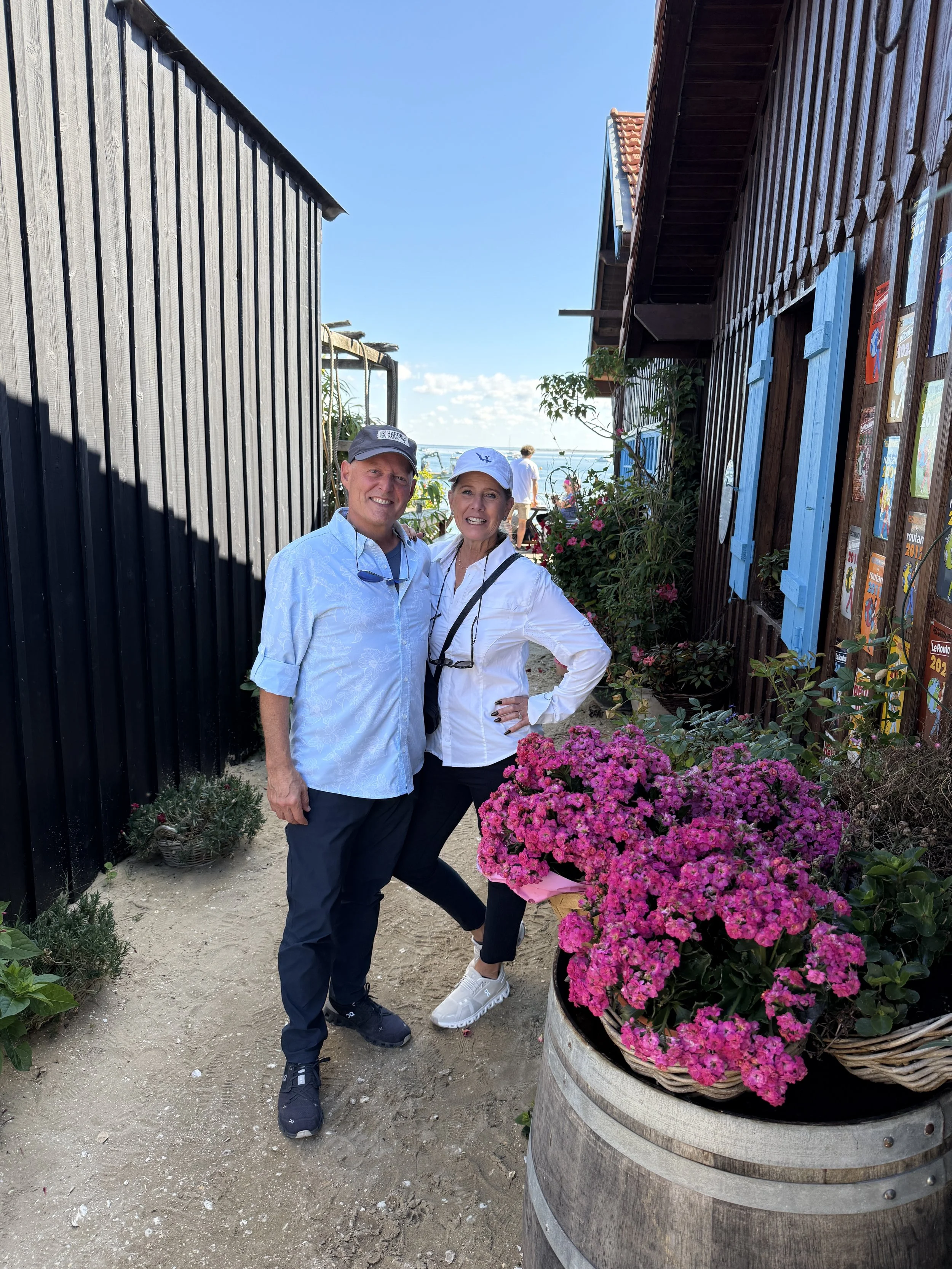
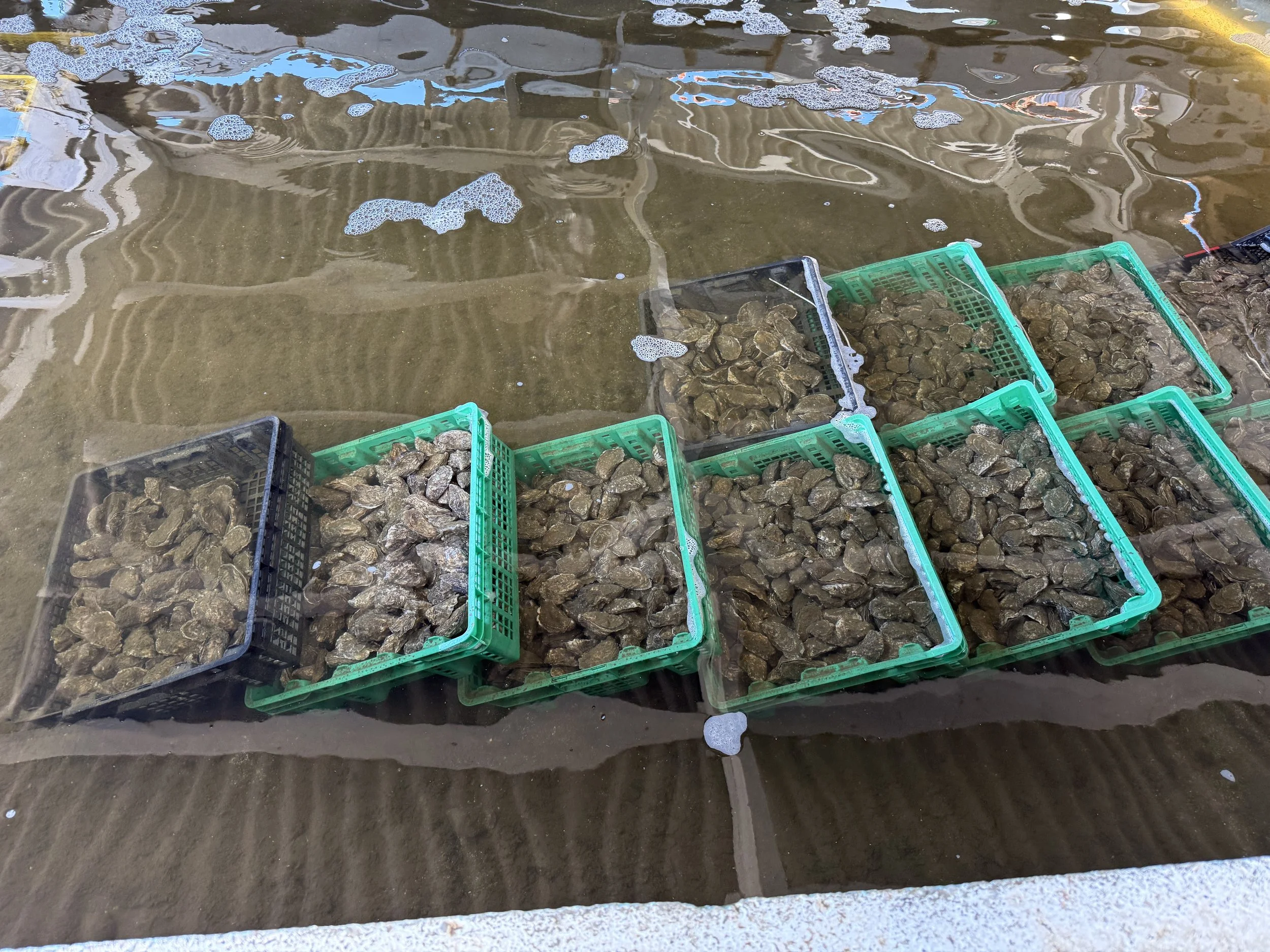
Today we drove west of Bordeaux to Lège-Cap-Ferret, which is on the Atlantic coast. The area is known for its oyster farms. We rented and rode bicycles along a fabulous bike path, had oysters and wine at La Cabane 57, and then continued on to lunch. If it wasn't for dessert, I would have called the meal forgettable, but the apple dessert was a real treat.
The broader Arcachon area, which includes Lège-Cap-Ferret, features the Dune du Pilat, Europe's tallest sand dune. Here are some details about the Dune du Pilat:
Size and Movement: It measures between 100 to 115 meters high, 500 meters wide, and 2.7 kilometers long. It's made up of approximately 60 million cubic meters of sand. The dune is constantly shifting 1 to 5 meters eastward each year due to winds and tides, gradually covering the adjoining forest.
Location and Landscape: Located at the entrance of the Arcachon basin, it offers a panoramic mix of forest, dune, and ocean. From the top, you can see the Atlantic Ocean, the sandbanks of the Banc d'Arguin, the passes of the Bassin d'Arcachon, and the forest of the Landes de Gascogne. On a clear day, Cap Ferret can be seen in the distance.
Activities: Visitors can climb to the top using stairs (available between Easter and All Saints Day) or directly through the sand. The Corniche beach at its base is perfect for a refreshing break or a stroll. It's also a popular spot for paragliding due to its exposed location and steep angle. Hiking trails are available to explore the dune and its surroundings.
History and Preservation: Archaeological discoveries indicate that temporary protohistoric camps for sea salt mining existed here 2,600 years ago. The Dune du Pilat is a protected natural area, classified as a Grand Site de France since 1978, with measures in place to protect its fragile ecosystem. Guided tours and visitor centers offer insights into its history, formation, and ecosystem.


Thursday, 25 September 2025 | Bordeaux Walking Tour
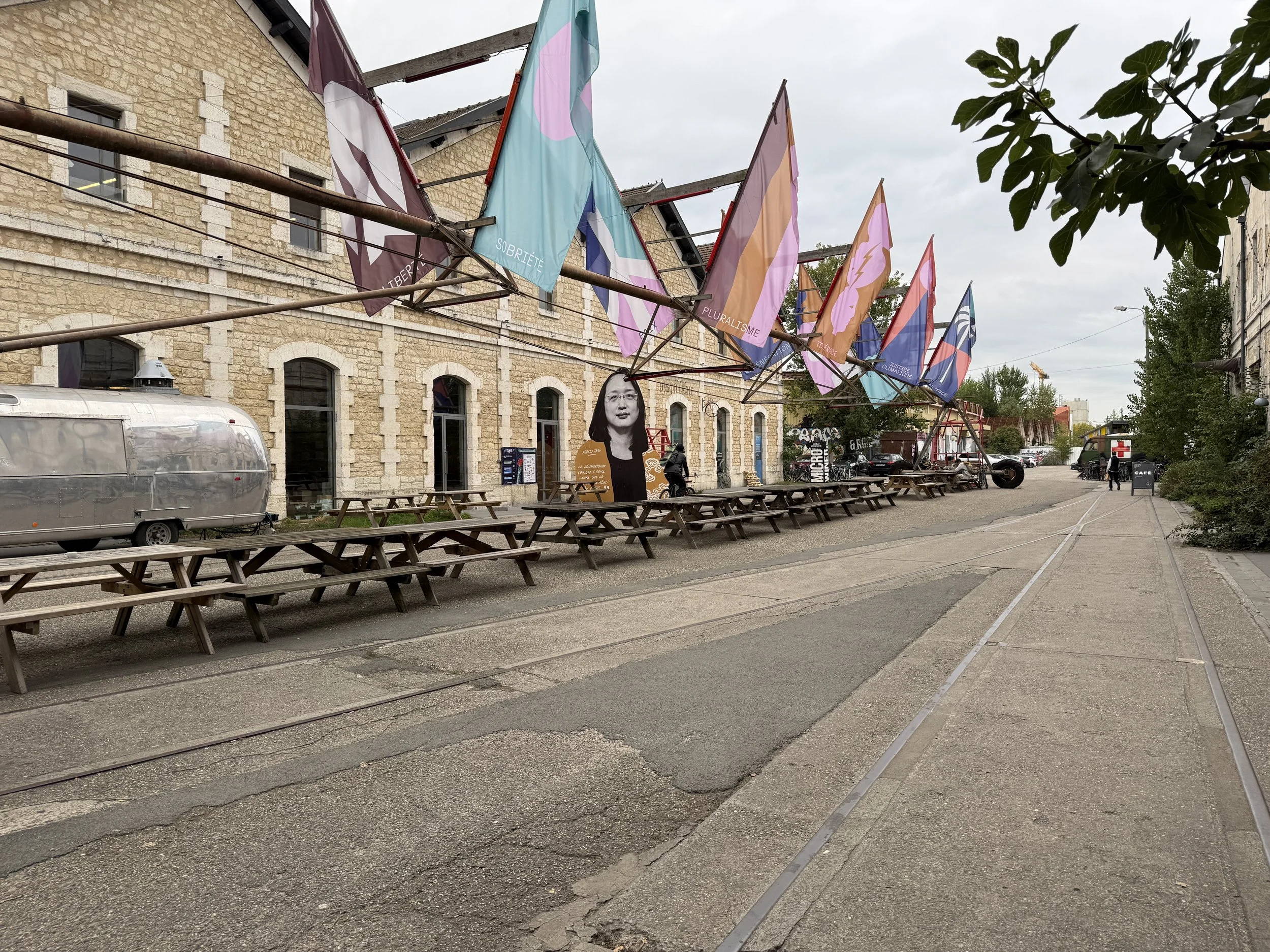
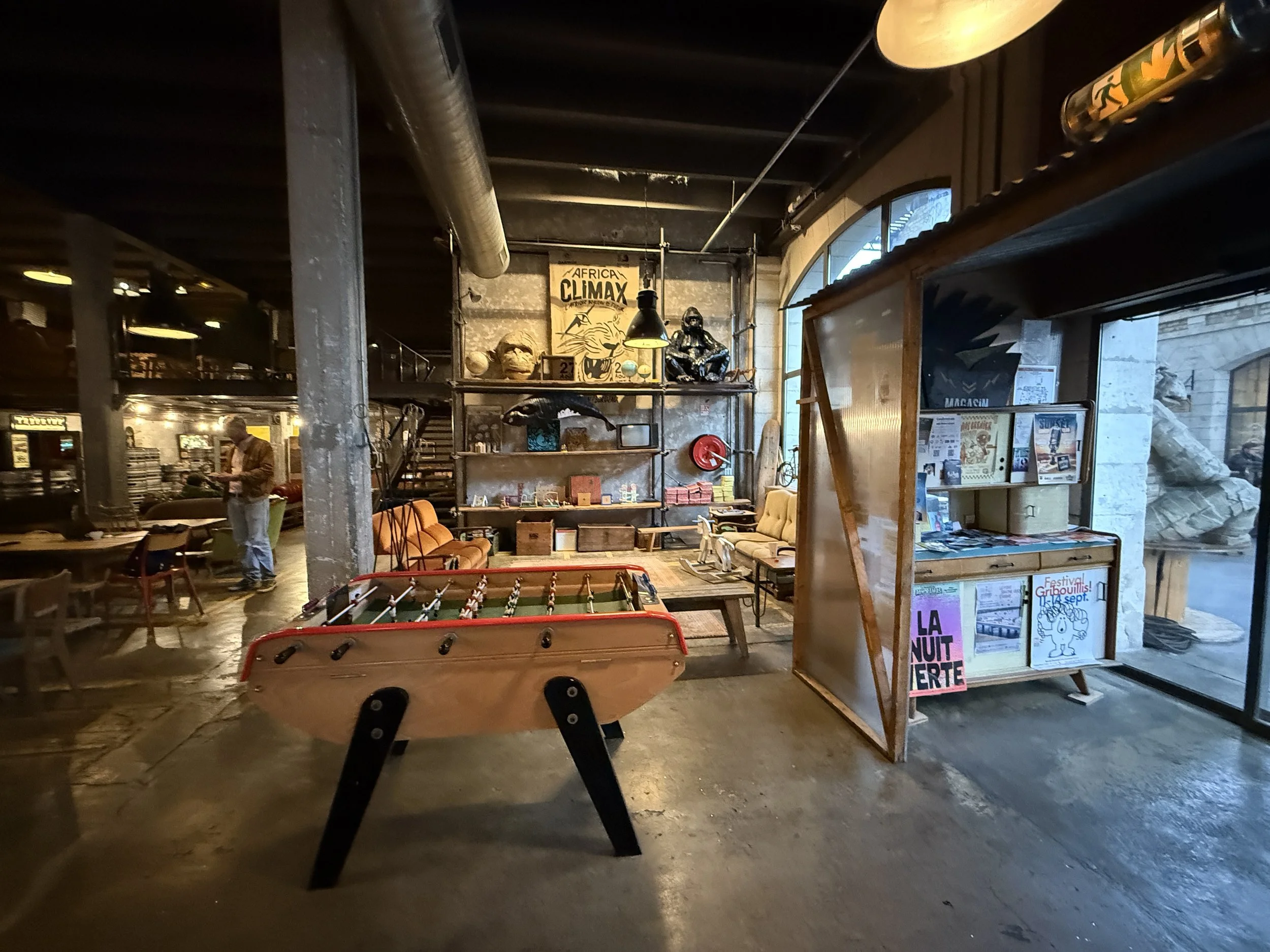
Early this morning we visited Darwin Eco-système, a unique and innovative eco-rehabilitated area in Bordeaux, France, located on the right bank of the Garonne river in the former Niel military barracks. It's a hub for urban culture, social entrepreneurship, and sustainable development, and is considered a trendy spot in Bordeaux.
Key features and offerings of Darwin Eco-système include:
Culture and Art: It's a significant urban cultural venue in Bordeaux, regularly hosting events, concerts, competitions, and exhibitions. The buildings are adorned with street art, and there's a large wooden installation in the courtyard.
Food and Drink: It features Le Magasin Général, described as the largest organic restaurant/store in France, emphasizing organic and local products. There's also an outdoor relaxation area and craft beer brewed on-site. Les Chantiers de la Garonne is a riverside restaurant and bar offering seafood.
Activities: Darwin is a popular spot for urban sports, with an indoor skatepark that can accommodate 300 skaters, as well as BMX and roller sports.
Work and Community: It provides shared workspaces and is a center for creative and cooperative economy, aiming to reconcile economy, culture, and ecology. Companies within Darwin focus on collaboration and resource sharing.
Events: Regular events include "Les Heures Heureuses" (happy hours) on Wednesdays with DJs, food trucks, and craft beer, as well as the Climax Festival (concerts, debates, street art, and ecology) in September, and a Christmas Market.
The site is open to the public, and guided tours are available to learn about its history, integration into the neighborhood, and transformation.
We ended the evening with a concert: “Ode to Romanticism” at the Bordeaux Auditorium concert hall.
Mary Kouyoumdjian , Tagh [Diary] of an Immigrant
Frédéric Chopin , Piano Concerto No. 2 op. 21
Franz Schubert , Symphony No. 1

Monday, 22 September 2025 | Bordeaux Cathedral, Jardin Public, and Chartrons
Today, we toured the Bordeaux Cathedral, Jardin Public, and walked north to the Chartrons area of town for lunch, where buildings were converted to store Bordeaux wine awaiting international shipment.
About these areas:
Bordeaux Cathedral (Cathédrale Saint-André): This magnificent Gothic cathedral is a key religious monument in Bordeaux and has been the site of royal weddings and solemn funerals. Its construction spans several centuries, with parts dating back to the 12th century. Uniquely, its bell tower, the Pey Berland Tower, is separated from the main cathedral structure. Visitors can climb 229 steps to the top of the 50-meter tower for panoramic views of Bordeaux. The cathedral also hosts an international organ festival annually.
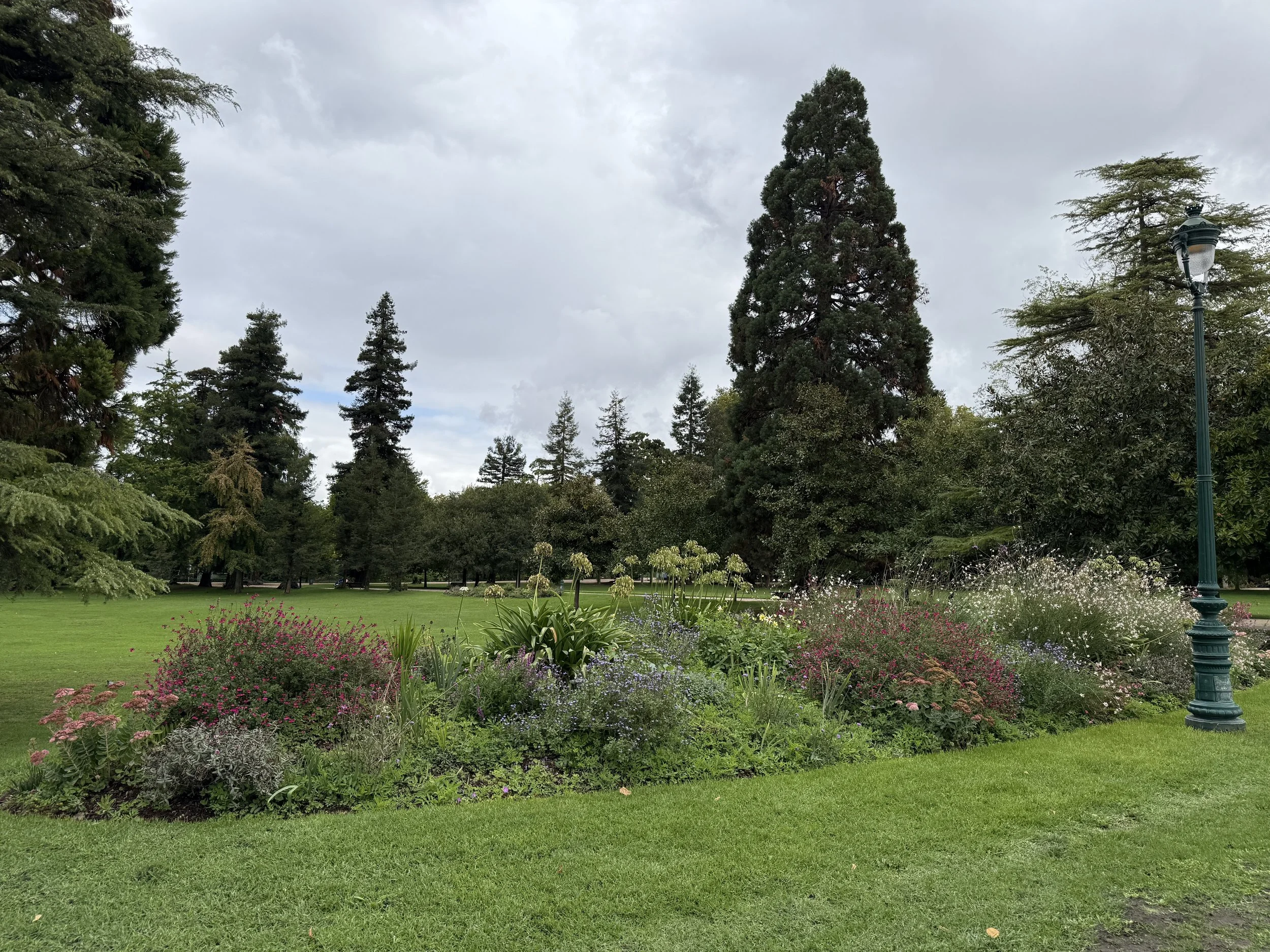
Jardin Public: This is a beautiful green space in the heart of Bordeaux's historic center. It's an ideal spot for relaxation and offers a natural oasis amidst the city.
Chartrons: Located north of the city center, the Chartrons district is known for its mix of housing, local shops, and emblematic Bordeaux heritage. Historically, this area was significant for wine trade, with many buildings converted into warehouses for storing Bordeaux wine before international shipment. The district also features the neo-Gothic Saint-Louis-des-Chartrons church, built between 1874 and 1880.


Friday, 19 September 2025 | Saint-Émilion: Truffle Education and Dinner
We arrived at Tina’s chateau mid-afternoon in Saint-Émilion for an education in black truffles, a cooking class, and dinner with Nico. It was quite an experience, even if it was a bit too many truffles for me! Here's what we learned about truffles:


Truffle Types and Edibility
Truffles are a type of subterranean fungus, related to mushrooms but growing entirely underground.
There are over 60 species, but only a few are prized and edible, including two major culinary types: white and black.
White truffles (Tuber magnatum) offer a delicate, garlic-like flavor, while black truffles (Tuber melanosporum and others) are more intense and earthy with rich umami notes.
Aroma and Culinary Use
Truffles' powerful aroma comes from volatile organic compounds in the fruiting body.
White truffles are typically used raw, shaved thinly over dishes like pasta, risotto, and eggs. Shaving is preferred to release more aroma, though mincing creates a different flavor profile.
Black truffles are more versatile and can be gently cooked, best prepared with fat (like butter or oil), and should not be overcooked to preserve their aroma.
Origin and Regions
Major growing regions include Périgord and Provence in France, Umbria/Tuscany in Italy, and Oregon, Washington, and Northern California in the US.
Truffles grow underground in a symbiotic relationship with trees such as oak or hazelnut, exchanging nutrients.
Harvest, Pricing, and Storage
Black truffle global harvest volumes typically range from 50–100 tons annually, fluctuating by region and season.
Top prices for fresh black truffles can reach €5000 per kilo, varying by quality, season, and grade.
About 5 grams of truffle is considered adequate for garnishing a dish for two people.
Fresh truffles can be frozen or vacuum-sealed for longer storage (typically 6 months to 3 years if properly packed and frozen).
Best practices for storage are to keep them unwashed, vacuum-packed, and frozen.
Truffle Biology and Symbiosis
Truffles are symbiotic: they exchange nutrients with the host tree without damaging it—a mycorrhizal relationship essential for both.
Only a small percentage of planted spores result in successful truffle formation.
Old host oaks are often resistant, requiring careful selection for truffle cultivation.
Finding Truffles and Pests
Traditionally, pigs and dogs have been used for truffle hunting; dogs are generally more convenient as pigs may eat the truffles.
Flies and other pests can lay eggs in truffles, potentially damaging them and affecting their grading.
Truffles usually grow 10–50 cm below ground.
Color and Ripening
Black truffles start as lighter/red and mature to black; environmental conditions, host tree health, and soil factors affect their growth and quality.
Many factors can hinder cultivation, including climate, soil, tree compatibility, and pests.
Grading and Quality
Truffles are graded mainly by aroma, shape, size, and lack of damage. International guidelines define extra/premium, first, second, and pieces / shavings grades.
"Knifing" (making a small cut to expose the gleba for inspection) is standard for grading to assess ripeness and quality.
Thursday, 18 September 2025 | Bordeaux and Saint-Émilion Wine Country
We departed Biarritz for the Bordeaux/Saint-Émilion region, a three-hour drive north. There, we toured two vineyards with Colin's parents, who, through their connections with winemakers in Paso Robles, arranged very personal tours. One of these, Corbin, was a Grand Cru class wine. "Grand Cru" class constitutes 60 of 800 appellations, a designation reviewed every decade by government officials, representing wines that achieve the highest standards. The regional grape was predominantly merlot, harvested just last Saturday. We enjoyed the 2018 and 2015 vintages, which we were told should hold up well longer than we’ll be alive. The owner prefers not to use a carafe, believing the wine will open up naturally over a meal and should be treated gently. She affectionately described her freshly-picked berries as her “babies.” The vineyard has been passed down through the females in her family, and she inherited it from her grandmother after years of studying and working in the business.

About Bordeaux: A world-renowned wine region in southwestern France, famous for its prestigious vineyards and châteaux. The city of Bordeaux, a UNESCO World Heritage site, is a vibrant hub known for its architecture, gastronomy, and as a gateway to the surrounding wine country.
About Saint-Émilion: A picturesque medieval village and a major wine-producing appellation in the Bordeaux region. Also a UNESCO World Heritage site, it's celebrated for its monolithic church, charming cobbled streets, and historic vineyards, primarily growing Merlot and Cabernet Franc grapes.
Sunday, 14 September 2025 | Danielle & Colin's Wedding
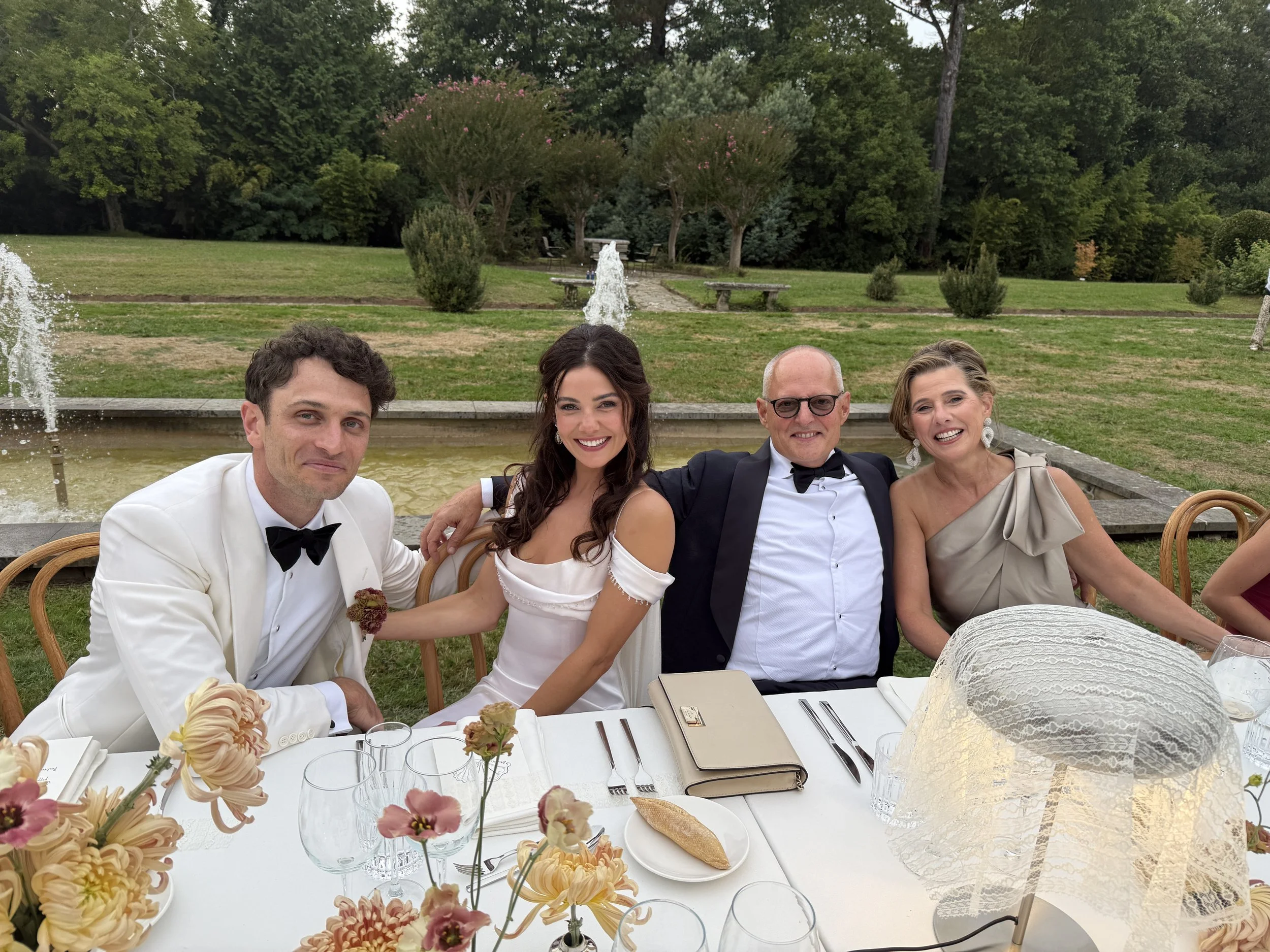
Danielle & Colin's weekend wedding was elegant, spectacular, and uniquely their own. Yes, I'm biased. Sometimes pictures tell the story better than words, whereas for some stories we’re hopeful there are no pictures.


Thursday, 11 September 2025 | Chateau Claire de Lune and Gaztelur Estate
Today, we shuttled family members over to Chateau Claire de Lune, where the wedding festivities will take place. The historic property is beautiful and, according to the groom, feels a little bit haunted. We had a fabulous family dinner with fine wines at the Gaztelur Estate, a nearby gourmet restaurant.
Wednesday, 10 September 2025 | A Groom's Calamity and Family Gatherings
Today marked a significant day for our assembling wedding guests. I drove Colin, the groom, to Irun, Spain, about 30 minutes south of Biarritz, to see a physical therapist. An ultrasound confirmed a small tear in his calf muscle from surfing. Hopefully, this injury won't impair his dancing on Saturday night! Tomorrow, the family will gather at the Chateau Claire de Lune for three nights of festivities, culminating in Saturday's wedding.
Saturday, 07 September 2025 | Arrivals, Celebrations, and a Full Moon's Promise
After a refreshing morning swim in the Atlantic, Danielle and Colin arrived in Biarritz. We had a fabulous dinner at Cheri Bi Bi, where we celebrated Harold's 63rd birthday. Tonight, a full moon is rising over the Atlantic from the direction of San Sebastien, Spain, though increasing cloud cover makes it doubtful we'll be able to see it.
Friday, 05 September 2025 | Arrivals, Surfing Mishaps, and Biarritz Bliss
Harold and Elena arrived Thursday afternoon and settled into their AirBnB. We all met for dinner at Bar Jean, enjoying the lively atmosphere. Today, Jay eagerly took his surfboard out for a brief ride, but unfortunately, the board's strap broke within the first 30 minutes, forcing an early return. We then enjoyed a relaxing ocean swim, followed by coffee and croissants, and simply chilled out for a bit. As the afternoon progressed, the wind and surf settled down. We caught up with Danielle, and then headed back out to watch Jay surf. The weather was picture-postcard perfect Biarritz.
Tuesday, 02 September 2025 | A Walk to the River's Mouth
After grocery shopping this morning at the local Biarritz farmer's market, we donned our walking shoes and walked north, passing the casino along La Grande Plage, and all the way north to Plage de La Barre, where the Atlantic meets the Adour River that travels through Bayonne. We stopped for drinks before returning to Biarritz to enjoy experienced surfers mastering the still impressively-potent ocean waves. Our phones indicated we clocked 20,000 steps today (11.3 miles), which took us roughly 1 hour 15 minutes each way. Johnny arrives tomorrow, hopefully with my tuxedo!!
Monday, 01 September 2025 | A Quiet Day and Surfing Spectacle
A quiet day in Biarritz. We bought Panama hats at a local farmer's market, authentic Ecuadoran creations, then went on a hike to neighboring Anglet and witnessed a surfing competition of sorts. Experienced surfers performed tricks on their boards including riding backwards, three atop aligned boards, handstands, two on a board with one doing a wheelbarrow move, and another doing flips forward and backward. Meanwhile, I ordered a beer without tripping. Hard to believe what the surfers were able to accomplish while riding impressively-sized waves. Hurricane Erin constructed waves 10 feet high, while we watched from shore in 23°C temps with a fabulous breeze. With August winding down, we’ve been told Biarritz will be more “normal” than what we’ve experienced thus far (fewer Parisians on vacation).
Friday, 29 August 2025 | Anglet and a Rainy Afternoon
We ventured north to Anglet today for a hike. The surf is pounding, the beaches are officially closed, and blustery winds accompanied a drizzle that started when we arrived. By the time we got back to Biarritz and finished our shopping for dinner at the local farmer's market, it was clear we would be staying inside for the rest of a rainy afternoon.
About Anglet: Often called the "Little California" of the Basque Coast, is known for its eleven beaches stretching along 4.5 kilometers of coastline, making it a prime spot for surfing and watersports. It also boasts extensive pine forests, like the Forêt de Chiberta and Pignada, offering walking and cycling paths, and is home to a golf course.
27 August 2025 - Surfers, Sole, and a Storm on the Horizon
With a change in the weather approaching, we decided to get in a good hike, heading 8.6 km south to the fishing village of Guéthary. The walk took us a little under two hours, tracing the coastline through the town of Bidart with the Atlantic in view nearly the entire way. The sky had turned a moody gray, and back in Biarritz, the beaches were officially closed. A storm is brewing.
We arrived in Guéthary and settled in for lunch at a fantastic spot called Heteroclito, perched with a perfect view of the sea. Some of the staff wore t-shirts ironically advertising "sea, fish, and sun" as the clouds thickened. We shared a beautiful sole meunière, grilled gambas, and a fresh salad while watching a lineup of experienced surfers below. They were all patiently waiting for the perfect wave, a powerful swell generated by the remnants of Hurricane Erin churning its way up the U.S. eastern seaboard last week. It's amazing to think that a storm an ocean away is putting on this show for us today.
During our meal, we struck up a conversation with a lovely, well-traveled couple from Houston. We exchanged stories and might try to reconnect before our family arrives. Feeling satisfied and a bit tired from the walk, we opted for the easy way home, hopping a local bus back to Biarritz to relax for the evening and wait for the rain.
About Guéthary: A small, charming village on the Basque coast between Biarritz and Saint-Jean-de-Luz, Guéthary was historically a Basque whaling port. Today, it is renowned for its picturesque setting and as a world-class surfing spot, attracting surfers who come for its famous reef breaks.
Monday, 25 August 2025 | Bayonne and the Quest for a Wine Cooler
We ventured to nearby Bayonne, where we wandered through the charming old town and strolled along the river. The day's unforgettable moment came from a housewares shop. Georganne, on a quest to keep our beach wine chilled, approached the owner, a man with a mustache that could star in its own French film. “Do you have insulated coolers for wine?” she asked. He blinked. “What?” She tried again, “You know, like a little Yeti, to keep wine cold at the beach?” Another blank “What?” Undeterred, Georganne asked, “What do you use?” The man shrugged and deadpanned, “A glass. You bring the bottle, you pour it in a glass.” We left empty-handed but were cackling at his beautifully simple, no-nonsense French logic.
About Bayonne: A historic city in the French Basque Country, Bayonne sits at the confluence of the Nive and Adour rivers. It's known for its medieval old town with narrow, cobbled streets and timber-framed houses. Its centerpiece is the magnificent Saint Marie Cathedral, a 13th-century Gothic gem and UNESCO World Heritage site with a serene cloister.
Sunday, 24 August 2025 | A Slow Biarritz Morning
We woke to another stunner of a day in Biarritz. The seagulls, our new alarm clock, were cawing like they had urgent gossip to share with the entire coastline. After a week of running around, we decided to embrace a slower pace. The morning coffee at the apartment felt lonely, so we made a plan: a mission to Les Halles to secure the perfect croissant sidekick. There’s something wonderful about settling into the rhythm of a place, where the day’s biggest objective is a buttery pastry. Biarritz, you’re spoiling us.
Saturday, 23 August 2025 | Duck, Cava, and a Day in Saint Jean-de-Luz
We took a short drive down the coast to Saint Jean-de-Luz. The sun was out, the water at the main beach was "just right," and the waves were gentle. After a stroll, we visited the local farmer’s market—a foodie carnival with stalls so gorgeous they could star in a cookbook. While gathering ingredients for a Lebanese dinner, I asked a vendor about the proper etiquette for addressing her: “madame” or “mademoiselle”? She grinned and said “madame” is the safe bet now, explaining that modern inclusivity is smoothing out the old-fashioned wrinkles in French custom.
The highlight of the day, however, was lunch at Aux Pigeons Blancs. We ordered the duck, and it was heavenly—crisp skin, tender meat, a dish that was a straight-up win. We toasted with glasses of Cava, clinking to a perfect day.
About Saint Jean-de-Luz: A picturesque Basque fishing town at the mouth of the Nivelle river, known for its protected bay and historic center. Its most famous landmark is the Saint-Jean-Baptiste Church, where King Louis XIV married Marie-Thérèse of Spain in 1660. The town retains much of its 17th-century charm, including Maison Louis XIV where the king stayed before his wedding.
Friday, 22 August 2025 | Surfers, Sea Views, and a Michelin Meal
The morning took us to Plage de la Côte des Basques, the surfing soul of Biarritz. We watched the waves and struck up a conversation with a surfer riding a hydrofoil board, who showed us a six-inch rip in his wetsuit from a close call with the blade. It was a potent reminder of the power and risk that make the sport so alluring.
For dinner, we treated ourselves to Le Saleya, a Michelin-mentioned gem conveniently located next door to our rental. The meal was a knockout: beef tartare with mango sorbet (a weirdly perfect combination), and a dish of octopus and pork that proved to be strange but delicious bedfellows. The experience was made even more memorable by a flamboyant fellow diner—who had the flair of an interior designer—that danced his way outside for a smoke break, stealing the show like a peacock in flip-flops. After dinner, we took a long walk past the grand casino on Grande Plage and up to the Phare de Biarritz lighthouse, watching the lights glitter along the coast.
Thursday, 21 August 2025 | Tides and a Grocery Mecca
Our first full day began with a swim at Plage du Port Vieux, a snug little beach tucked into a cove. We channeled our inner Jacques Cousteau and swam out to a massive rock offshore, a feat that felt like a local rite of passage. The tide, however, had other plans. It slipped out while we were resting, turning our return swim into a rocky dodgeball game. We later noticed the seasoned local swimmers, who glided through the water with inflatable safety markers tied to their waists—part safety gear, part beach chic.
Later, we drove to the outskirts of Bayonne to stock up on groceries at a Carrefour hypermarket. This was the largest of the five Carrefour store formats—think Walmart Supercenter but with an impeccable French flair for displaying food. The sheer variety was astounding. Our only hiccup was the shopping cart, which required a 1€ coin we didn't have. Luckily, someone had left a reusable bag behind, a souvenir we’ll probably use for the next year.
Wednesday, 20 August 2025 | Arrival in Biarritz
We finally made it to Biarritz. A classic travel saga unfolded: a storm squatted over the Atlanta airport, delaying our flight and slashing our layover in Paris. After grabbing our rental car, we found our AirBnB on the sixth floor of a building in the heart of town. In a moment of travel-addled oversight, I’d forgotten to book a parking spot, but we lucked into a garage stall in the building. From our shoebox apartment, the seaside view is pure magic.
Our neighborhood is perfectly situated: we’re a stone’s throw from Carrefour City for essentials, Bar Jean (the designated gathering spot for the wedding crew), and Les Halles de Biarritz, a sprawling two-building market. Wandering through the market's extravaganza of seafood, cheese, and produce, we even caught a clerk meticulously vacuuming cheese crumbs between wheels of brie.
About Biarritz: An elegant seaside town on France’s Basque coast, Biarritz has been a summer playground for royalty since the 1800s and is now a major surfing hub. Key landmarks include the Rocher de la Vierge, a statue of the Virgin Mary set on a rock accessible by a footbridge, and the wide, sandy beaches like Grande Plage.

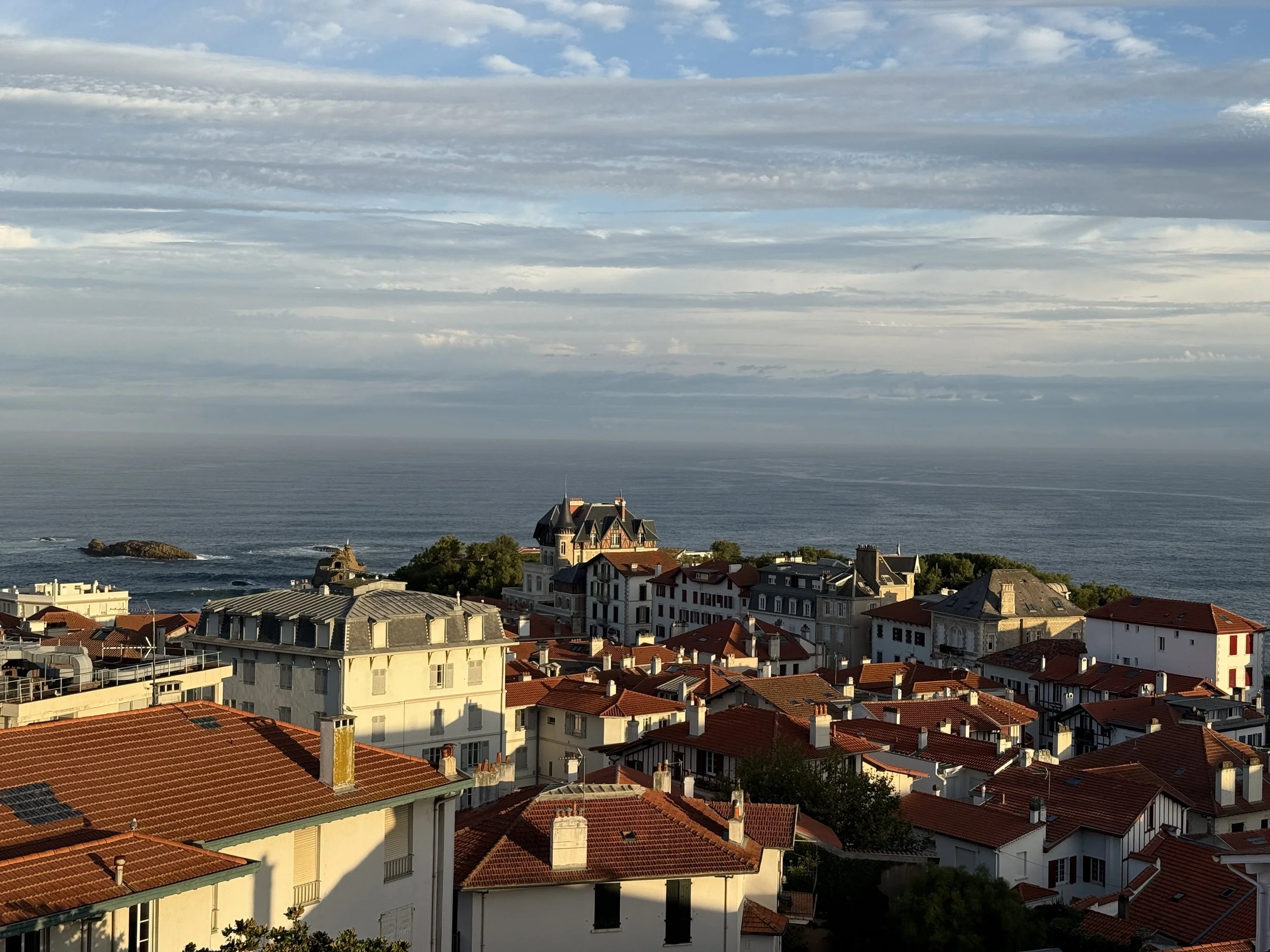
Balcony view, Biarritz

Casino, Biarritz
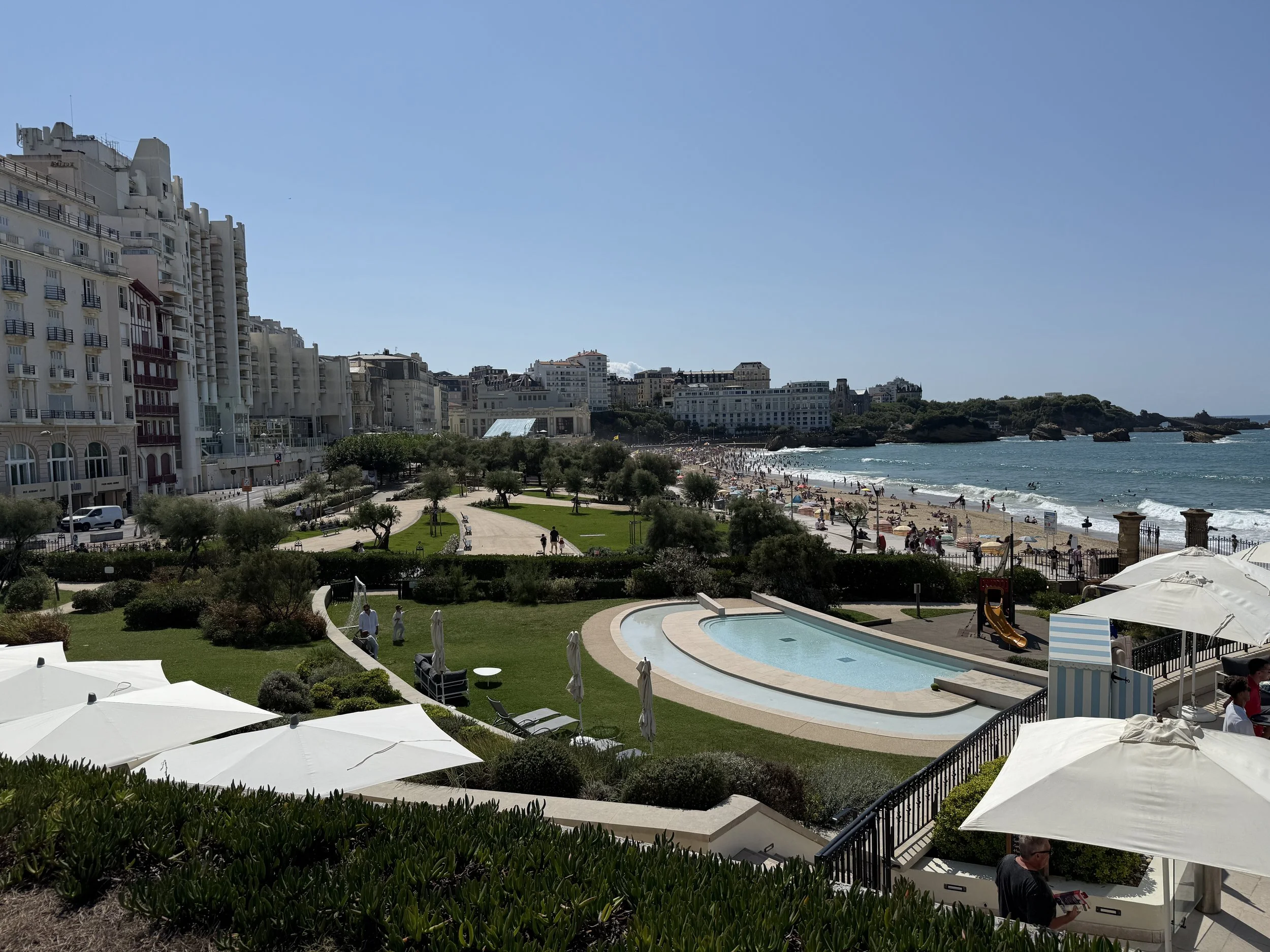
Downtown beach in Biarritz

Arrived, Biarritz
Monday, 18 August 2025 | The Send-Off in Atlanta
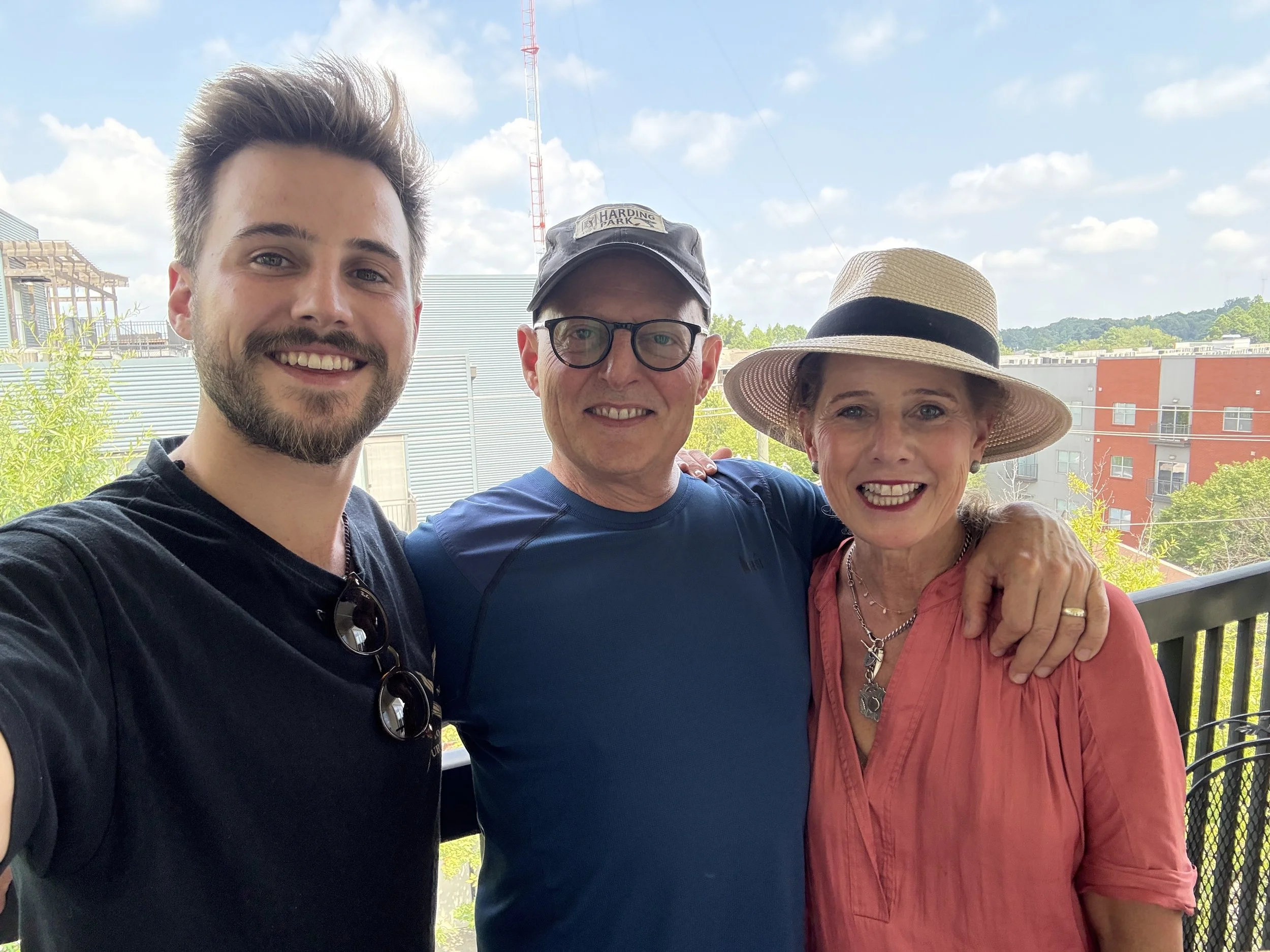
Our last meal on American soil was at Atlanta’s Barcelona Wine Bar, a favorite tapas spot. We met up with our son and plowed through plates of small bites, laughing over travel plans like we were plotting a grand escape. The place hummed with the city’s after-work crowd, a sort of Southern potluck with a Spanish twist that felt like the perfect warm-up for what’s to come.
Amidst the celebratory chaos, there was one lingering detail: my tuxedo for the wedding has yet to appear. Here’s hoping Jay remembers to pack it before he jets off to join us. Savoring those last tapas with him was the perfect pre-departure send-off.
Excited to leave for Biarritz!